Anatomy of the Brain
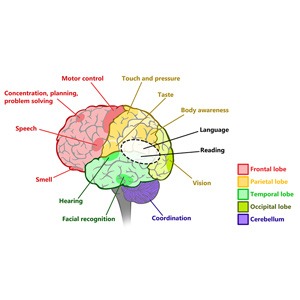
The human brain is a three-pound organ and is located within the skull. It is the most complex and one of the largest organs in the human body and plays a major role in almost all body functions. It controls speech, memory, thoughts, leg and arm movements, as well as the function of several organs within the body. It also regulates the secretion of hormones and breathing and heart rates.
Conditions
- Acoustic Neuroma
- Arachnoiditis
- Benign Brain Tumors
- Brain Aneurysm
- Brain Metastases
- Brain Tumor
- Brain Vascular Malformations
- Cavernous Malformation
- Occipital Neuralgia
- Oligodendrogliomas
- Peripheral Nerve Conditions
- Peripheral Nerve Tumors
- Peripheral Neuropathy
- Pituitary Tumors
- Skull Base Meningioma
- Neuromuscular Disorders
- Stroke
- Traumatic Brain Injury
- Vascular Brain Tumor
- Trigeminal Neuralgia/Hemifacial Spasm
Procedures
- Craniotomy
- Endoscopic Pituitary/Extended Transsphenoidal Tumor Resection
- Stereotactic Radiosurgery
- Ventriculoperitoneal Shunt
- Accelerated Transcranial Magnetic Stimulation
- Brain Tumor Surgery
- Craniectomy
- Cranioplasty
- BrainsWay Deep Transcranial Magnetic Stimulation (Deep TMS)
- Cerebrovascular (Neurovascular) Surgery
- Chiari Decompression
- Complex Cranial Surgery
- Deep TMS
- Endoscopic Brain Surgery
- Endoscopic Third Ventriculostomy (ETV)
- Endoscopic Craniotomy Microvascular Decompression for Trigeminal Neuralgia or Hemifacial Spasm
- Meningioma
- Minimally Invasive Brain Surgery
- Minimally Invasive Endoscopic Neurosurgery
- Peripheral Nerve Stimulation
- Transcranial Magnetic Stimulation
- Trauma Craniotomy